You’re actually both correct in your assessments, but alas the Windows 10 EOL is nuanced like many things.
@Paul_Lefebvre You’re correct in that the “Consumer” version of Windows 10 has indeed been EOL’d.
@Björn_Eiríksson You’re correct in that the “Commercial/Enterprise/Education” versions of Windows 10 have NOT be EOL’d
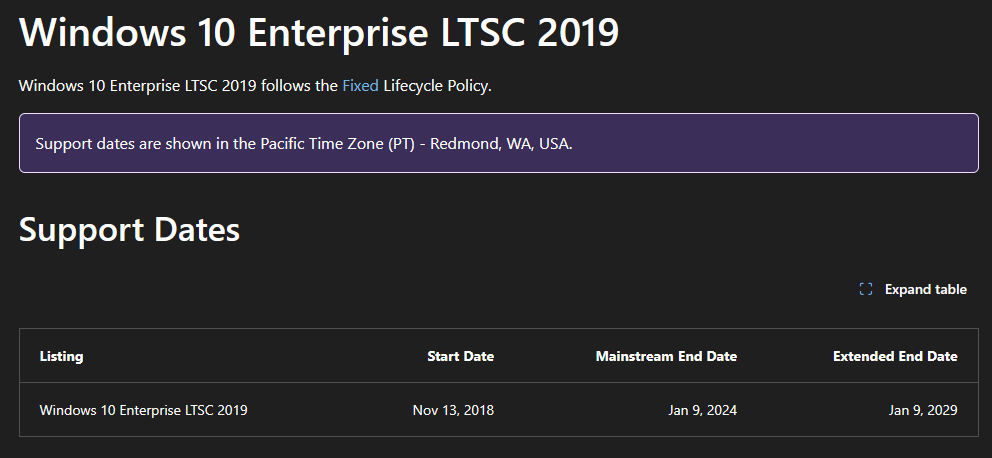
From what I’ve gathered, here’s the breakdown with EOL dates:
Windows 10 Enterprise LTSC 2019
January 9, 2029
Windows 10 Enterprise LTSC 2021
No publicly listed date but based upon the IoT version date I think it’s save to say it’s 2032.
Windows 10 IoT Enterprise LTSC 2019
January 9, 2029
Windows 10 IoT Enterprise LTSC 2021
January 13, 2032
With that said though, it’s unclear what percentage of Windows 10 is actually LTSC, but some estimates put it at 2%. If Windows 10 is 41.74% of the Windows install base, and there are 1.4 Billion installs of Windows, then LTSC would be about 12 Million. Not a huge number, but in certain silos definitely something that could be critical, static and non-moving (e.g. try convincing a larger corporation to move to the next version of Windows if they’re not ready, have support for the existing version and want to keep costs and risks low).
So for anyone using Xojo in a commercial/corporate/education scenario, the decision to drop Windows 10 support in Xojo will be detrimental to Xojo developers including those who might be citizen developers.
Just like most devs, I’m generally happy to EOL support for older OSes as it makes code TLC, validation and support that much easier, so I completely get where Xojo is coming from. But maybe 2026 is too soon and things should go another year or two past 2026, or maybe take it on a year by year basis based upon Xojo dev feedback and market trends?